
OpenAI, GitHub and Cursor all used Friday to announce Gartner recognition in enterprise coding agents. The more interesting story is not the badge race, but what the category now assumes: software development is becoming a managed agent workflow, not a smarter autocomplete field.

Anthropic’s May 22 security posts put numbers around a frontier-lab dilemma: the same models that help defenders find vulnerabilities can also learn to develop exploits. This Q&A-style reading treats the documents as the interview subject and asks what the programme changes in practice.
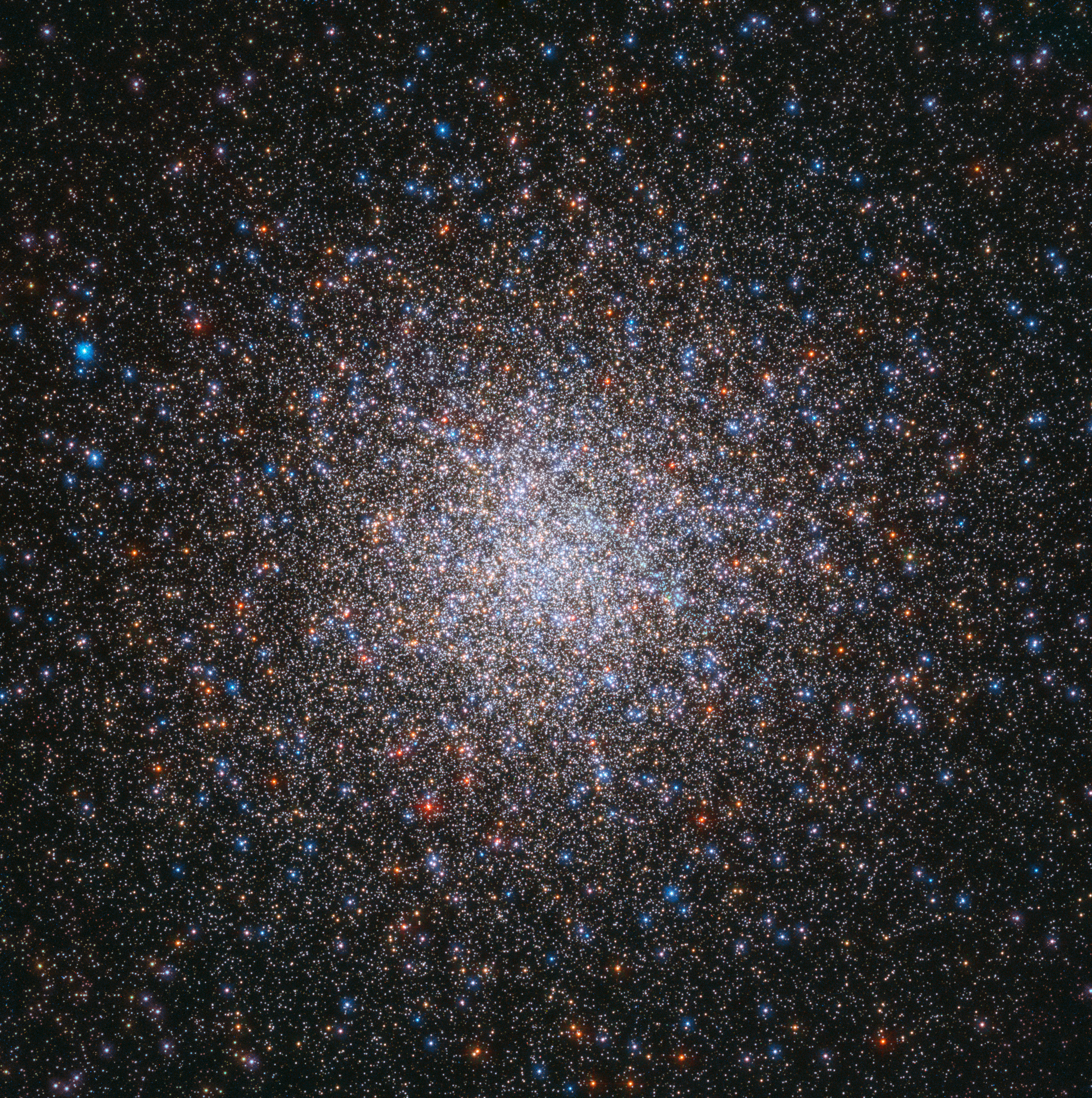
NASA’s Astronomy Picture of the Day for May 23 returns to Messier 2, a globular cluster whose crowded core turns stellar archaeology into a jewel box. It is not new, which is part of the point: some weekend images work because they slow the news down.
NASA’s Astronomy Picture of the Day for May 23 returns to Messier 2, a dense globular cluster in Aquarius. The Hubble image works as a weekend image because it turns stellar archaeology into something almost tactile: hundreds of thousands of ancient stars, packed into a bright gravitational swarm roughly 37,000 light-years away. Messier saw a mist; modern astronomy sees a fossil population that helps test how old stars age, migrate and survive in the Milky Way’s halo.
On May 23, 1967, a powerful solar flare disrupted radio and radar systems, including U.S. early-warning radar. Later historical work reported by AGU showed that Air Force space-weather forecasters helped identify the Sun, not the Soviet Union, as the cause. It is a useful Cold War footnote for a technology newspaper: invisible solar physics briefly entered nuclear command-and-control history, and the difference between escalation and restraint was a group of people who understood the signal before the politics hardened around it.
Robots have become much better at seeing objects than at feeling them. TacO proposes a benchmark for comparing tactile sensors in object-manipulation tasks, making the question less about whether a sensor produces interesting data and more about whether it helps a robot grip, infer contact and complete practical actions. Treat it as infrastructure for embodied AI: not a new robot hand, but a common yardstick for a field where hardware, datasets and tasks are still hard to compare.
arXiv:2605.21976 →