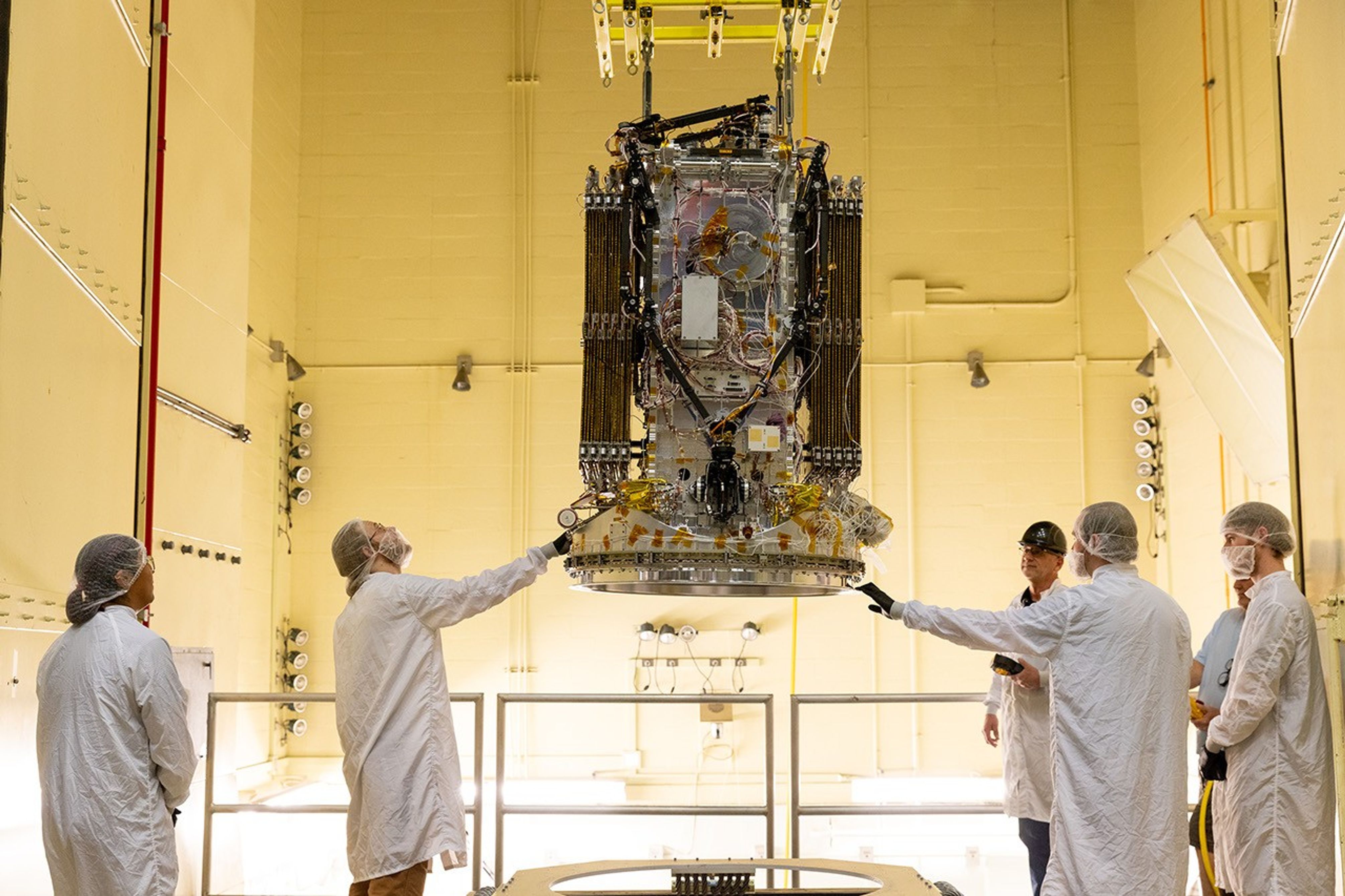
NASA is preparing to show reporters a mission that is modest in size but large in implication: a robotic spacecraft intended to rendezvous with the Neil Gehrels Swift Observatory and raise its orbit.
The agency’s May 21 media advisory says Katalyst Space Technologies’ servicing vehicle, called LINK, will launch on Pegasus in June and attach to Swift for the reboost. The event is being hosted at NASA’s Wallops Flight Facility, with the advisory also tied to NASA Goddard, where the hardware has been through environmental testing.
Swift is a 21-year-old observatory best known for quickly detecting gamma-ray bursts and turning follow-up instruments toward them. Its orbit has been gradually decaying. A successful reboost would not turn Swift into a new spacecraft, but it could buy time for an observatory whose value comes partly from being on call when the sky changes.
The broader point is servicing. Space agencies and companies have long talked about refuelling, repairing and repositioning satellites, but most spacecraft were not designed with friendly docking fixtures or easy replacement parts. A mission like LINK therefore sits between two eras: the old one, where most satellites are disposable, and a hoped-for one, where high-value assets can be maintained.
The cautious read is that this is still a demonstration until it works. Rendezvous and attachment around an ageing science spacecraft leave little margin for drama, and a reboost must protect the observatory as much as extend it. If successful, however, it would be a useful proof point for keeping scientific instruments alive without launching their replacements immediately.
The engineering lesson is broader than one telescope. Low Earth orbit is filling with assets that were designed, financed and insured on assumptions about limited lifetimes. Servicing changes that calculus. It can reduce debris pressure, extend useful missions and make operators think harder about docking, interfaces and modularity before launch. Swift is a science case, but the capability being tested is part of a larger shift toward treating spacecraft less like sealed appliances and more like infrastructure.
For now, NASA is rightly presenting the mission as a preview and not a victory lap. The important result will be whether LINK can approach, attach and boost without harming the observatory. If it can, a small craft will have made a practical argument for a less disposable orbital economy.