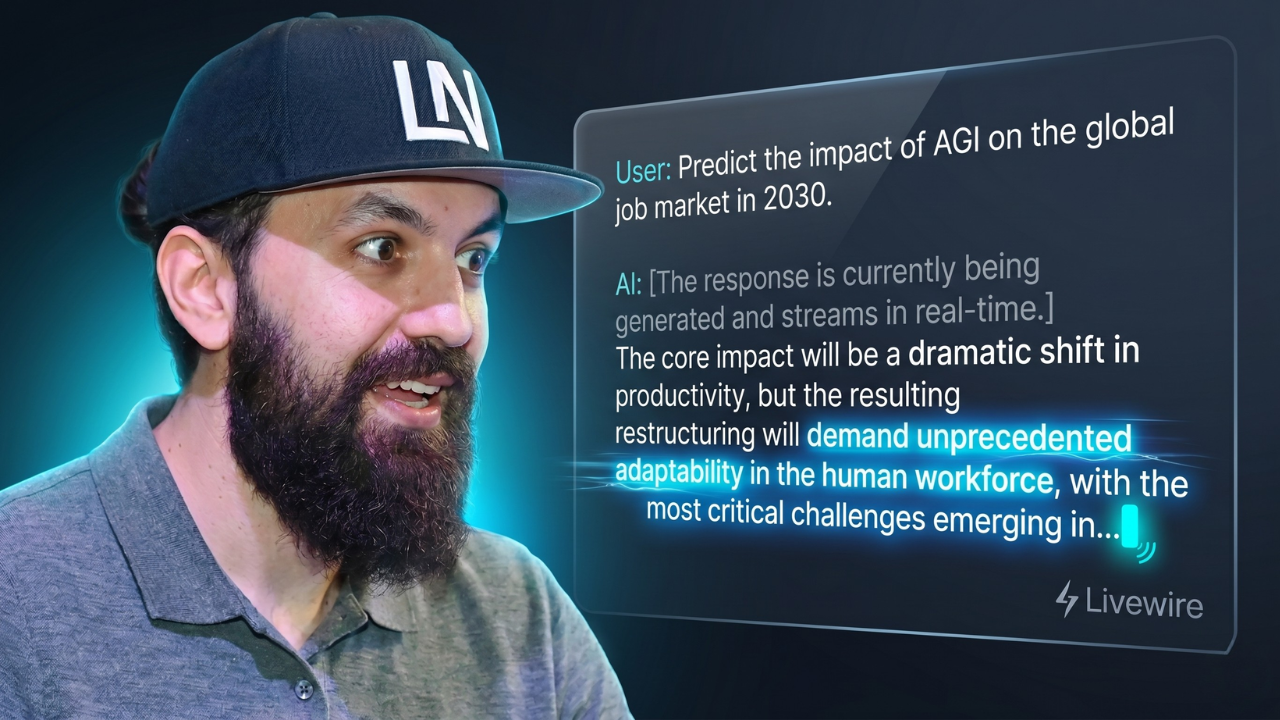
Laravel News has published a new Ship AI with Laravel instalment showing how to build a real-time streaming chat widget with Livewire, Alpine and server-sent events. The series had already built an agent that talks through JSON; this episode focuses on making responses stream word by word as the model generates them.
That sounds like polish, but it changes the product feel. Users tolerate a slow model far better when they can see it working. Streaming also exposes design questions that prototypes often dodge: cancellation, partial output, error states, retry behaviour, typing indicators, scroll management and how much of the model’s internal tool use should be visible.
For Laravel teams, the useful part is that the pattern stays close to the stack. Livewire and SSE can deliver a responsive AI interface without forcing a wholesale front-end rewrite. That matters for agencies with existing Laravel apps where the brief is “add an assistant here”, not “turn the product into a React experiment”.
The warning is that streaming is not a substitute for product boundaries. A chat box still needs permissions, rate limits, logging, prompt hygiene and a clear answer to what the assistant is allowed to know or do. The episode is valuable because it tackles the interface layer; the next hard work is joining that interface to safe actions.
It is also a useful antidote to overcomplication. Many AI product discussions jump straight to agents, queues and distributed orchestration. A large share of client value still starts with a well-behaved request, a stream of partial tokens, a way to stop generation and a UI that does not feel frozen. Getting that layer right makes the later agent work less theatrical and more usable.