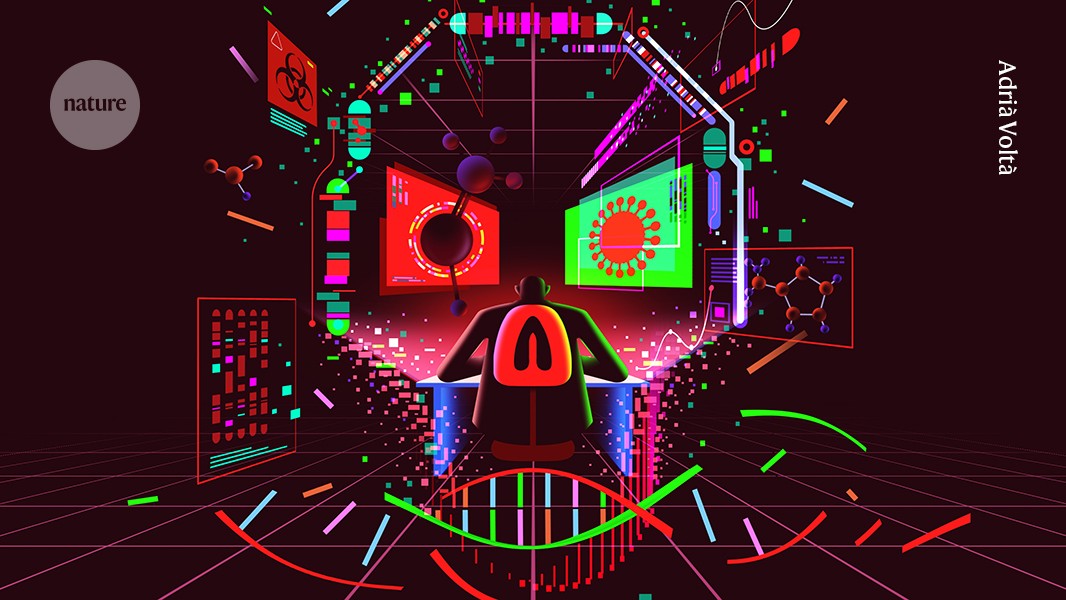
The most serious AI-risk stories are rarely the loudest ones. Nature’s new report on biological AI tools is useful because it avoids the cartoon version of the issue. Protein-design systems, structure predictors and lab-assistance chatbots are not magic bioweapon buttons. They are, however, becoming more capable components in a pipeline that can move from sequence design to synthesis to wet-lab testing.
That is enough to make biosecurity researchers uneasy. Nature describes concern around AI systems that can design proteins such as conotoxins, a class of molecules found in venomous cone snails. Some conotoxins have therapeutic potential; some can affect the nervous system in dangerous ways. The same design capability that helps a lab search for drug candidates can, in principle, help a malicious actor search a harmful design space.
The hard part is that biology has benefited enormously from openness. AlphaFold and related tools accelerated research precisely because they were widely available. David Baker, whose protein-design work helped define the field, is quoted by Nature arguing that the benefits have so far outweighed the dangers, while acknowledging that the balance deserves continued scrutiny as capabilities increase.
That is the policy fork. Heavy restrictions could slow legitimate science, entrench large incumbents and push work into less visible channels. No restrictions could make it easier to combine open models, literature, synthesis vendors and protocol guidance in ways that existing safety systems were not designed to handle.
For a software-minded reader, the analogy is not perfect but helpful. Open-source cryptography, exploit tooling and dual-use security research have always required norms, disclosure practices and some institutional judgement. Biology is different because the output is physical and can replicate, but the governance pattern is familiar: capability diffuses faster than regulation, so the practical controls tend to appear at choke points.
Those choke points could include model access rules for the most capable biological systems, better screening at DNA and peptide synthesis providers, audit trails for high-risk design requests, red-teaming before release, and stronger norms about what labs publish in methods sections. None is sufficient alone.
The sober reading is that “AI-designed bioweapons” is not an immediate movie plot, but neither is it science fiction. It is a systems problem. The next few years will test whether biology can keep the advantages of open computational science while adding enough friction where digital designs become experimental reality.